Design and Implementation of a Small Enterprise Network
A comprehensive Networking II final project that simulates the design and implementation of a small enterprise network for a college environment using VLANs, routing protocols, subnetting, and essential network services.
[OVERVIEW]
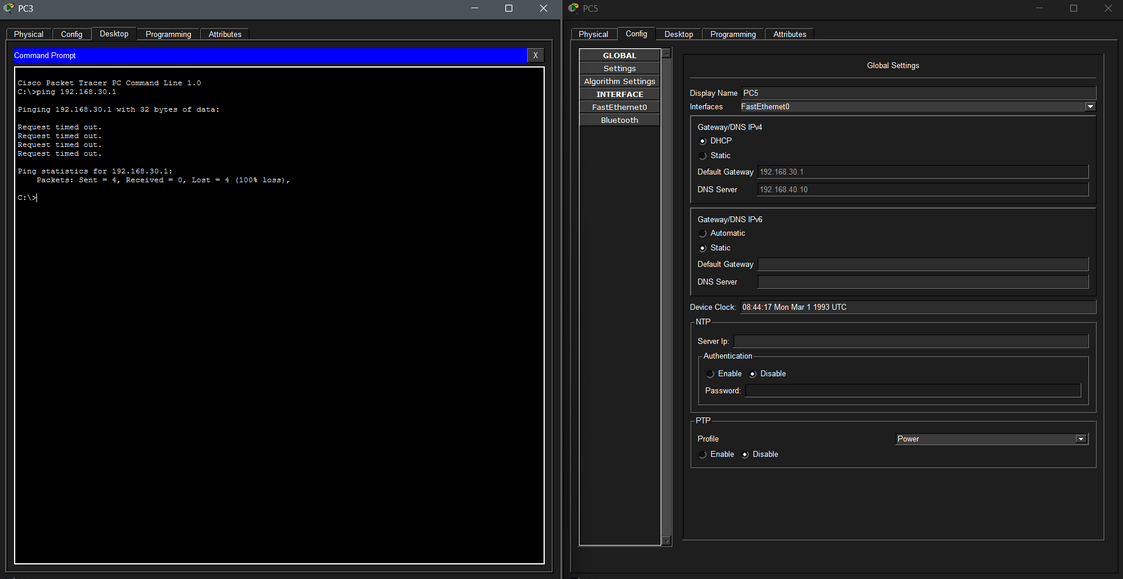
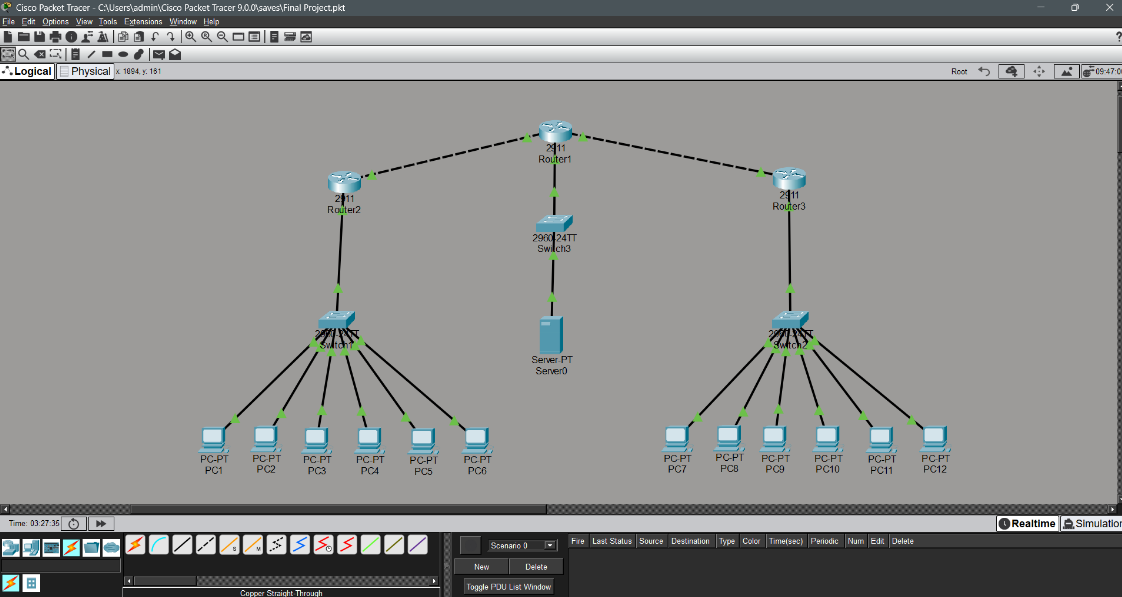
This project focuses on designing and implementing a secure and scalable enterprise network for the College of Information and Communications Technology (CICT). The simulated network supports three departments—Administration, Faculty, and Students—each isolated using VLANs while maintaining inter-department communication through routing. The project demonstrates practical applications of network design principles, routing protocols, and basic network security.
[KEY FEATURES]
- Departmental separation using VLANs for Administration, Faculty, and Students
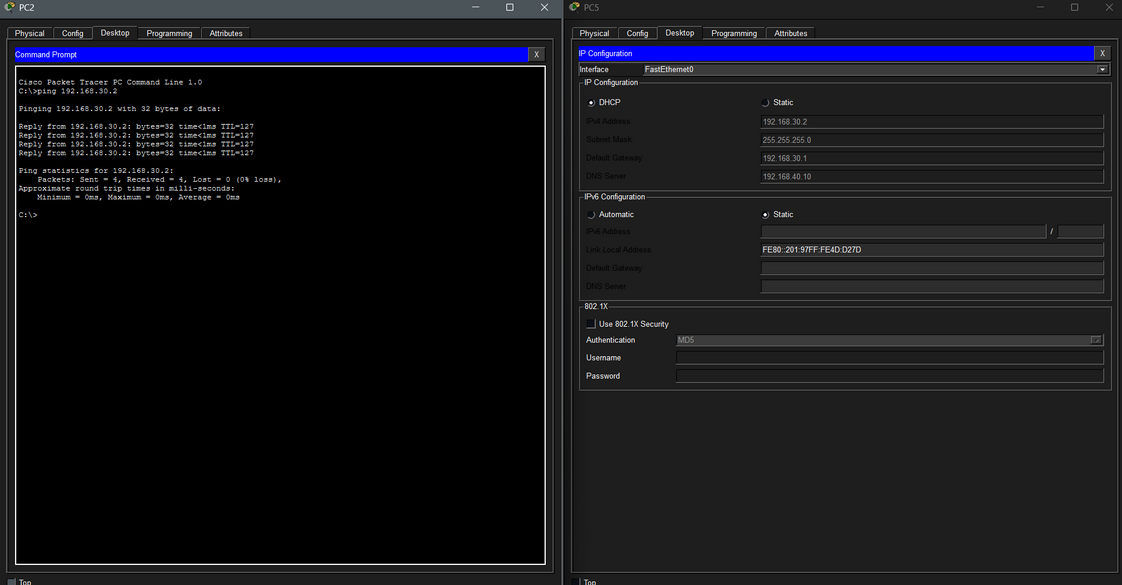
- Inter-VLAN communication using Router-on-a-Stick configuration
- Dynamic routing implementation using OSPF across three routers
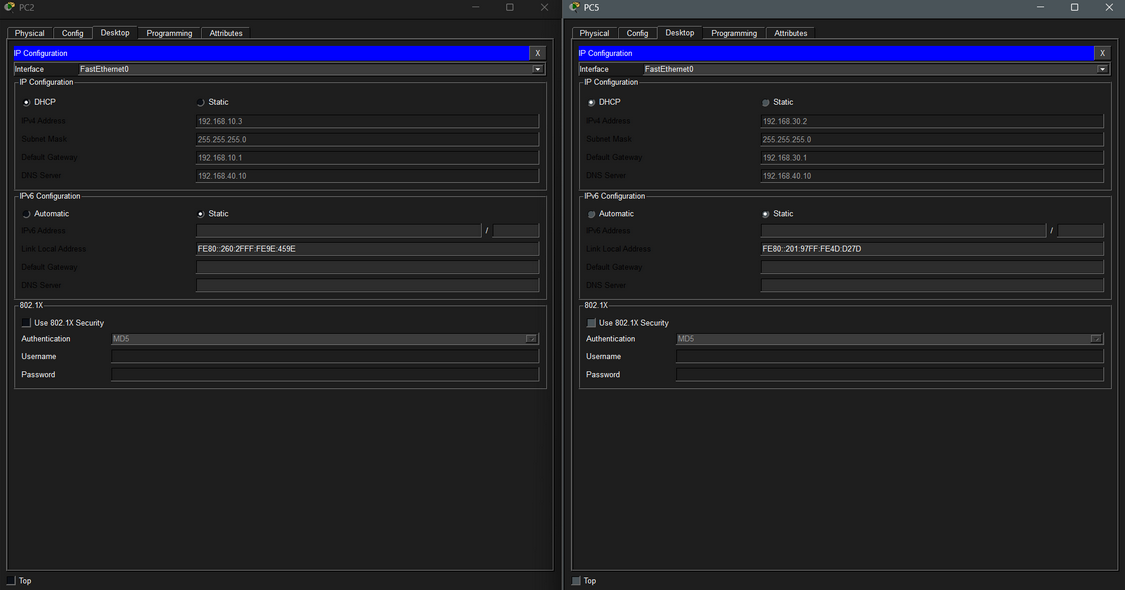
- Automatic IP address allocation via centralized DHCP configuration
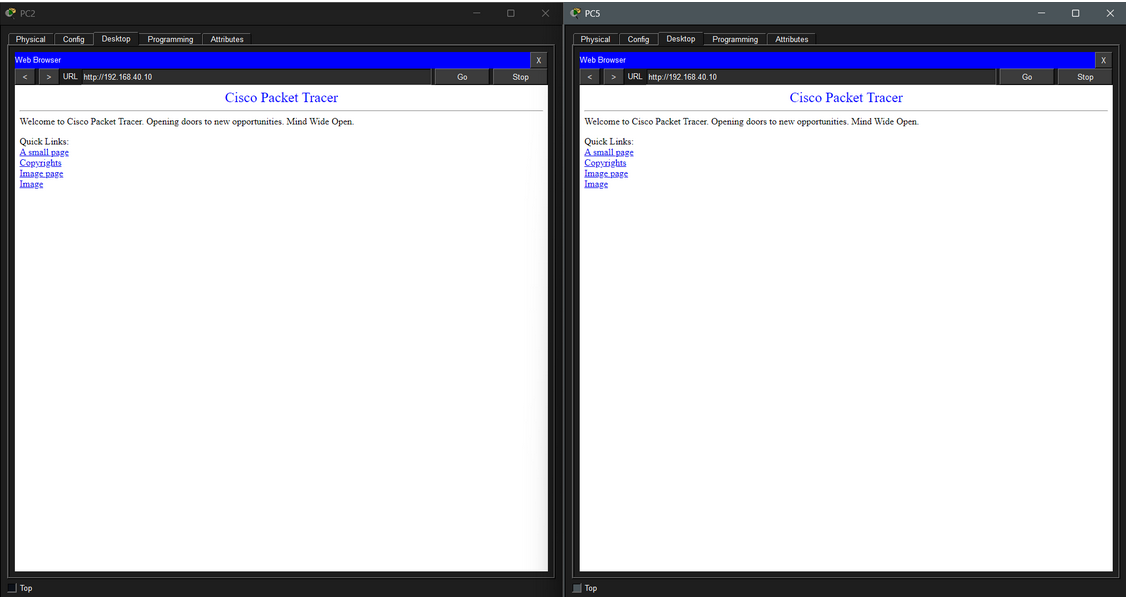
- Deployment of DNS and Web services on a dedicated server network
- Basic network security through port security, device passwords, and controlled access
[TECHNICAL DETAILS]
The network was implemented using Cisco-based configurations with a focus on real-world enterprise practices. Layer 2 switches handle VLAN segmentation and trunking, while routers manage inter-VLAN routing and dynamic routing using OSPF. Subnetting was applied to efficiently allocate IP address ranges per department. Additional configurations include DHCP services, server setup for DNS and HTTP/HTTPS, port security on switches, and basic router and switch hardening.
[SCREENSHOTS]